|
|
| December 2008 |
|
|
The
Paul Penders Blog is now live!
Actively
maintained by the entire company, the Blog is the online home of the
Paul Penders family with company and product news as well as updates
from Malaysia and China. It also contains posts that reflect the heart
and soul of its people, with inspirational quotes, stories of daily
accomplishments and discussions about the issues that matter most.
All members of the Paul Penders community are invited to visit the Blog and contribute....
To go to the Blog, please click here.
|
| In
This Issue: |
|
Paul Penders in Korea |
|
Awards |
|
Price Reduction |
|
Nanoparticles |
|
|
|
|
|
Paul Penders Products Flourish in Korea
Over
the past three years, Paul Penders has established a loyal following in
South Korea. More than 3,000 individual distributors currently sell
Paul Penders hair care, skin care and cosmetic products through a
multi-level marketing system organized by the Seoul-based company,
FORYOU.
While other multi-level marketing companies such as Avon
and Mary Kay have languished in Korea, FORYOU credits its success to
the high quality of the Paul Penders line, Korean consumers’ growing
interest in natural products and the extensive educational programs it
provides.
Paul Penders products incorporate only natural
ingredients, using LevensESSENTIE GoldTM, a time-tested combination of 22
herbs and nutrients, as a base. This contrasts with many other products
sold in Korea that claim to be all-natural but in fact often contain
harmful synthetic chemicals.
“From the first moment I met Paul,
I felt that he was very honest and trustworthy,” says Mr. Yoo, the
president of the Beauty Academy and R&D manager of FORYOU company.
“He cares deeply about the products he sells and wants to make sure
they are as safe and effective as possible.”
As consumers
worldwide become more aware of the dangers of certain synthetic
ingredients, they are increasingly selecting natural products. With a
highly educated and cosmopolitan population, demand for natural skin
care products in Korea is also rising.
It’s particularly
noteworthy that Paul Penders’ presence in Korea has expanded so quickly
solely on the basis of word-of-mouth recommendations. Mr. Yoo believes
that much of the reason for this is the in-depth knowledge of its
distributors.
“We have a training center where we instruct
distributors in the techniques of massage, skin care, product sales and
management,” he says. “This helps them explain how the products
work and why they are so different from other skin care brands.
Consumers then have an understanding of why natural products are better
for them and how the Paul Penders products are unique.”
This
training is comprehensive – about one third of FORYOU distributors own
beauty shops, and many use the skills they learn to establish
businesses specifically to market the Paul Penders products.
“Beauty
shops are an excellent place to talk about skin care,” says Mr. Yoo,
“because people are relaxed and interested in learning about new ways
to look their best.”
Although the full Paul Penders hair care,
skin care and cosmetic lines are available in Korea, the most popular
products are skin care kits containing day cream, night cream,
exfoliant and toning spray. The kits, called “30 Day Spa”, contain a 4
to 6 week supply of products that are designed to complete and
systematic facial care.
|
|
Paul Penders Wins Two Awards in U.S.
After
an extensive review of more than 100 natural cosmetic brands including
Aubrey Organics, Thalgo, MD Skincare and many more, H2O Magazine has
honored Paul Penders with two product awards.
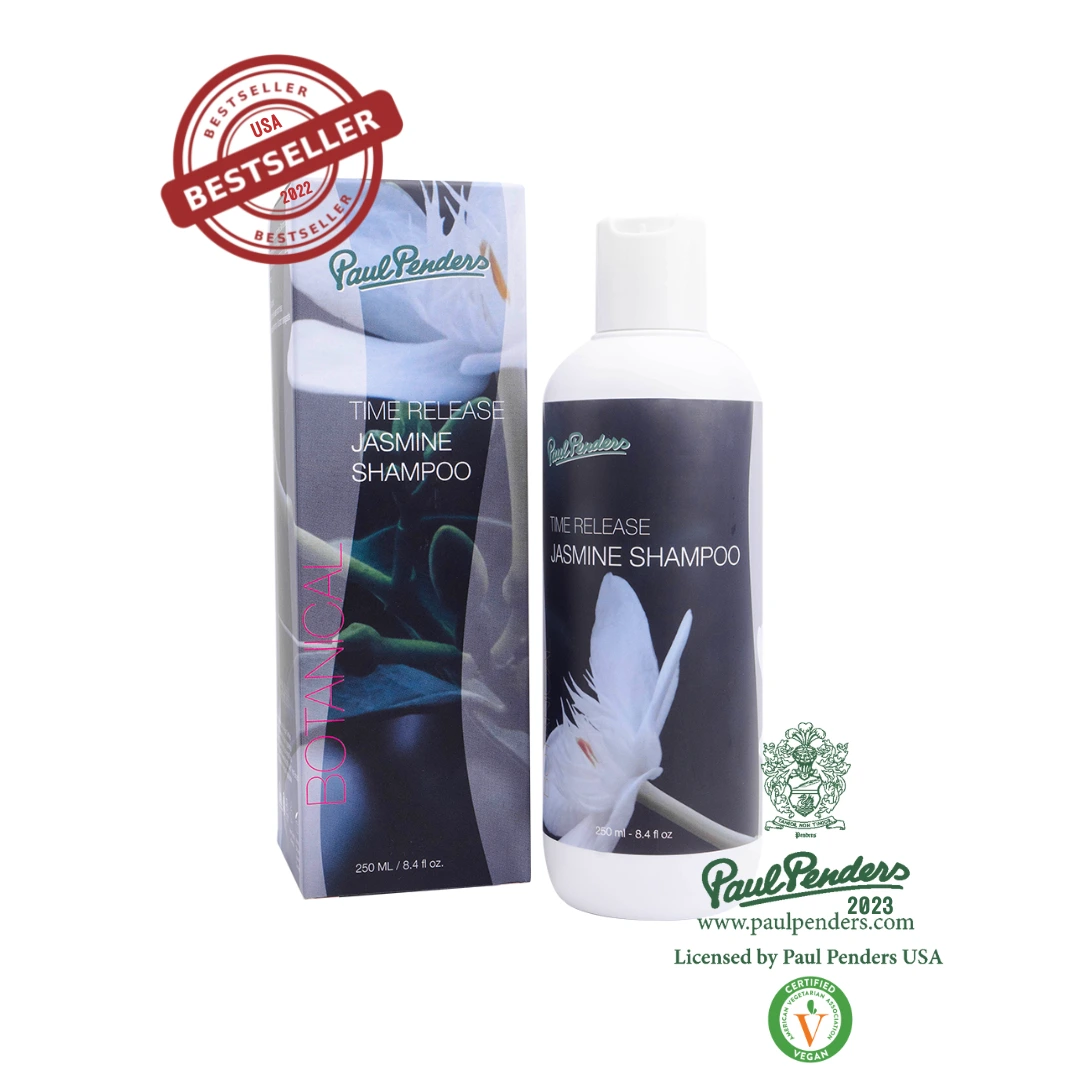
Intensive
Clarifying Therapy (ICT) and olive-oil based Time Release Shampoo were
cited for their originality, unique formulation, functionality and
excellent results. Both were evaluated by the magazine’s testing panel,
which tried the products, analyzed ingredients and studied the
production process.
During this evaluation, the H2O beauty
experts gained a greater appreciation for the all-natural herbal
ingredients used in the products, many of which are sourced from Asia
and Langkawi Geopark.
In early 2009, a team of H2O magazine
journalists will travel to Langkawi Geopark to learn more about this
unique area and the Paul Penders product line. Planned articles include
an in-depth interview with Dr. Ghani, a Paul Penders scientist and
herbalist who will take the reporters on a walking tour through the
jungles of Langkawi Geopark where he will discuss the local herbs and
plants and their many uses.
Dr. Ghani is currently researching
pegaga, an indigenous plant listed by the World Health Organization
(WHO) as one of 10 global “wonder herbs”, and is working to formulate
natural perfumes from the organic plants growing at Langkawi Geopark.
He plans to open an alternative healing and wellness center on the
island in the near future.
|
|
Paul Penders Responds to Global Finance Crisis
Consumers
worldwide are feeling the pain of recession. Although they still need
to look and feel their best, most have less money to spend. Paul
Penders is responding to this crisis by lowering the cost of its
products.
The all-natural ingredients and manufacturing of all
products will remain the same, thereby preserving their high quality,
safety and excellent results. What will change will be the packaging:
instead of using relatively expensive containers, Paul Penders products
will be packaged in beautiful, but more functional containers that
offer greater economy.
The new packages will feature the same
fresh look as currently used in Paul Penders products sold in China:
elegant green pegaga leaves against a classic white background. The
change will affect Paul Penders skin care and cosmetic products, with
new packaging available in February or March. The hair care line will
not be affected.
Paul Penders will also implement other cost effective ways of working that will contribute to lower product prices.
|
|
Nanomaterials Seen as Potential Danger
According
to the U.K.’s Royal Commission on Environmental Pollution, the pace at
which new nanomaterials are reaching the market is beyond the capacity
of existing testing and regulatory arrangements.
Nanomaterials are routinely incorporated into skincare products, particularly those labelled as “anti-aging” or “regenerative”.
Although
the Commission notes that there is no evidence that nanomaterials harm
either human health or the environment, it emphasizes that the amount
of testing on such materials has been very limited.
Furthermore, laboratory tests on some nanoscale particles suggest they could pose dangers.
Some
progress can be made by extending the current REACH regulations to
cover nanoparticles. REACH imposes a responsibility on those who import
and manufacture chemicals to identify, and provide information, on any
potential health threats. The law’s limit of one ton (under which the
chemicals are exempt from regulation) may be too high, as nanoparticles
are often used in very small quantities.
The Commission
recommends a checklist system for materials not covered by the REACH
system, where manufacturers would be obliged by law to provide
information about the potential risks posed by the materials throughout
the product life cycle, including disposal by the consumer. An
environmental monitoring system is also needed, along with the
development of techniques to detect nanomaterials in the environment
and living organisms. According to the U.K.’s Royal Commission on
Environmental Pollution, the pace at which new nanomaterials are
reaching the market is beyond the capacity of existing testing and
regulatory arrangements.
Nanomaterials are routinely incorporated into skincare products, particularly those labelled as “anti-aging” or “regenerative”.
Although
the Commission notes that there is no evidence that nanomaterials harm
either human health or the environment, it emphasizes that the amount
of testing on such materials has been very limited.
Furthermore, laboratory tests on some nanoscale particles suggest they could pose dangers.
Some
progress can be made by extending the current REACH regulations to
cover nanoparticles. REACH imposes a responsibility on those who import
and manufacture chemicals to identify, and provide information, on any
potential health threats. The law’s limit of one ton (under which the
chemicals are exempt from regulation) may be too high, as nanoparticles
are often used in very small quantities.
The Commission
recommends a checklist system for materials not covered by the REACH
system, where manufacturers would be obliged by law to provide
information about the potential risks posed by the materials throughout
the product life cycle, including disposal by the consumer. An
environmental monitoring system is also needed, along with the
development of techniques to detect nanomaterials in the environment
and living organisms.
|
|
|
|
|
|
|
|
|
|
|
|
|
|
|
|